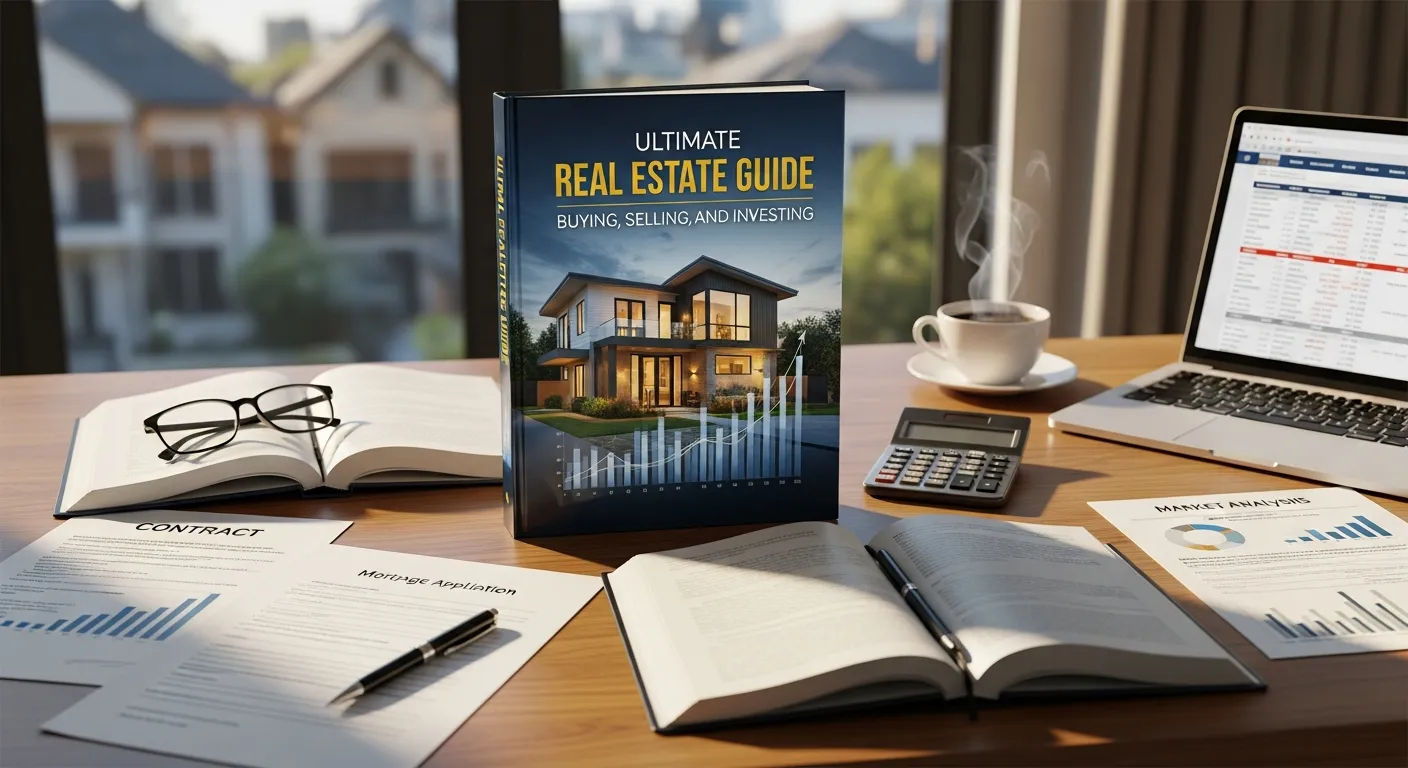
This comprehensive guide breaks down everything you need to know about the real estate market. You will learn actionable strategies for buying properties, expert tips for successful real estate investing, and proven methods to avoid common pitfalls in your next real estate transaction.
Navigating the complex world of real estate requires proven strategies and deep market knowledge. Whether you want to buy, sell, or invest, real estate offers incredible opportunities for wealth creation.
Understanding the Real Estate Market in 2026

The real estate industry is a dynamic sector that impacts everyone from first-time home buyers to large institutional investors. When you engage with real estate, you are entering a market driven by supply, demand, interest rates, and broader economic indicators. Understanding how these factors influence real estate prices is the first step toward making informed and profitable decisions.
Real estate encompasses land and any permanent structures attached to it, whether natural or man-made. The real estate market generally divides into several distinct categories, with the most common being residential real estate, commercial real estate, and industrial real estate. Each type of real estate behaves differently and responds to unique economic triggers.
If you want to succeed in real estate today, you must track local housing trends alongside national mortgage rate fluctuations. For example, lower mortgage rates often increase demand for residential real estate, while rising rates might cool the market down. By consistently monitoring real estate market trends, you position yourself to spot lucrative opportunities before the broader public catches on.
Residential Real Estate
Residential real estate includes single-family homes, condominiums, townhouses, and multifamily rental properties with fewer than five units. This sector of real estate is heavily influenced by consumer confidence, employment rates, and the basic human need for shelter. Most people enter the real estate market through residential purchases when they buy their primary residence.
Commercial Real Estate
Commercial real estate involves properties used specifically for business purposes. This includes shopping centers, office buildings, hotels, and apartment complexes with five or more units. Investing in commercial real estate typically requires more capital but can yield significant cash flow through long-term lease agreements. Businesses depend on commercial real estate to operate, making it a critical component of the overall economy.
Industrial Real Estate
Industrial real estate refers to properties used for manufacturing, production, distribution, and storage. Warehouses and factories fall under this real estate category. The rise of e-commerce has dramatically increased the demand for industrial real estate, as companies require massive distribution centers to fulfill online orders efficiently.
Step-by-Step Guide to Buying Real Estate
Buying real estate is one of the most significant financial decisions you will ever make. Approaching the real estate purchasing process systematically protects your capital and ensures you find a property that meets your specific needs.
Getting Pre-Approved and Setting a Budget
Before looking at real estate listings, you must understand your purchasing power. Contact a mortgage lender to get pre-approved for a real estate loan. A pre-approval letter shows sellers that you are a serious buyer with verified funds. During this phase, you should also calculate your comfortable monthly payment, factoring in real estate taxes, property insurance, and maintenance costs. You can read more about financing on the official Freddie Mac website to understand current mortgage standards.
Finding the Right Real Estate Agent
A knowledgeable real estate agent acts as your trusted advisor throughout the transaction. The right agent will understand your local real estate market intimately, helping you identify fairly priced properties and avoid overpriced listings. When interviewing potential real estate professionals, ask about their recent transaction history and their experience negotiating real estate contracts in competitive environments.
House Hunting and Property Viewings
Once you have your budget and your agent, the real estate search begins. Look beyond the cosmetic features of a property. When touring real estate, inspect the fundamental components like the roof, foundation, HVAC system, and plumbing. It helps to keep a checklist for every piece of real estate you visit, so you can easily compare your options later. Reading a comprehensive home buying checklist can help you stay organized during this phase.
Making an Offer on Real Estate Properties
When you find the perfect piece of real estate, your agent will help you draft a competitive offer. Your offer should account for recent comparable real estate sales in the neighborhood. In a highly competitive real estate market, you might need to offer the asking price or slightly above. In a slower real estate market, you can negotiate for a lower price or ask the seller to cover closing costs.
The Real Estate Closing Process
The final step in buying real estate is the closing process. During this phase, you will conduct a thorough real estate inspection, finalize your mortgage, and secure a real estate title policy. The title company ensures that the property is free of liens and that the seller has the legal right to transfer the real estate to you. Once all documents are signed and funds are distributed, you officially own the real estate.
Expert Insights on Real Estate Investing
Real estate investing is a proven pathway to building generational wealth. Unlike stocks or bonds, real estate is a tangible asset that can provide both regular cash flow and long-term appreciation. However, successful real estate investing requires education, patience, and strategic planning.
Rental Property Real Estate
Buying and holding rental real estate is a classic investment strategy. You purchase a residential or commercial real estate property, find reliable tenants, and collect monthly rent. The goal is to generate enough rental income to cover your real estate mortgage, taxes, and maintenance expenses, leaving you with positive cash flow. Over time, your tenants pay down your real estate mortgage while the property simultaneously appreciates in value.
Flipping Real Estate
Real estate flipping involves purchasing undervalued or distressed properties, renovating them, and selling them quickly for a profit. This real estate strategy requires a sharp eye for potential and a deep understanding of renovation costs. Successful real estate flippers know exactly what improvements will yield the highest return on investment in their specific real estate market.
Real Estate Investment Trusts
If you want to invest in real estate without the hassle of property management, consider Real Estate Investment Trusts. These are companies that own, operate, or finance income-generating real estate. You can buy shares of these trusts on major public exchanges, just like ordinary stocks. This method provides high liquidity and allows you to add real estate to your portfolio with very little upfront capital. Check out authoritative financial sites like Realtor.com for broader market data and real estate trust performance.
Real Estate Market Comparison: Residential vs. Commercial
Understanding the differences between residential and commercial real estate is crucial for aspiring investors. This table highlights the key distinctions between these two major real estate categories.
|
Feature |
Residential Real Estate |
Commercial Real Estate |
|---|---|---|
|
Barrier to Entry |
Lower capital requirements |
Higher capital requirements |
|
Lease Lengths |
Typically 12 months |
Usually 3 to 10 years |
|
Tenant Turnover |
Higher turnover rate |
Lower turnover rate |
|
Valuation Method |
Based on comparable sales |
Based on income generated |
|
Management Intensity |
High, frequent tenant issues |
Lower, tenants maintain property |
As this comparison illustrates, both forms of real estate offer unique advantages. Residential real estate is easier to enter, while commercial real estate often provides more stable, long-term returns. Exploring a detailed property investment guide will help you choose the right path for your specific goals.
Common Mistakes to Avoid in Real Estate

Many people lose money in real estate simply because they fail to follow basic industry rules. Avoiding these common real estate mistakes will protect your investments and streamline your transactions.
Skipping the Real Estate Inspection
Never buy real estate without a professional inspection. A property might look pristine on the surface but hide catastrophic foundational or plumbing issues. Paying a few hundred dollars for a comprehensive real estate inspection can save you tens of thousands of dollars in unexpected repairs down the road.
Overestimating Real Estate Appreciation
While real estate generally appreciates over time, values do not go up in a straight line. Assuming your real estate will instantly increase in value is a dangerous game. You should base your real estate investment decisions on current cash flow and conservative growth estimates rather than speculative appreciation.
Underestimating Real Estate Holding Costs
Owning real estate is expensive. Beyond your mortgage payment, you must account for real estate taxes, property insurance, routine maintenance, homeowner association fees, and unexpected repairs. Investors who fail to calculate these holding costs often find themselves losing money on their real estate ventures.
Trying to Time the Real Estate Market
Attempting to buy real estate exactly at the bottom of the market and sell exactly at the top is nearly impossible. Instead of trying to time the real estate cycle perfectly, focus on finding properties that make financial sense right now. Time in the real estate market is almost always more profitable than timing the real estate market.
Pro Tips for Selling Real Estate Quickly

When it comes time to sell your real estate, your goal is to secure the highest possible price in the shortest amount of time. Implement these professional real estate strategies to make your listing stand out.
First, invest in professional real estate photography. Most buyers start their real estate search online. If your listing features dark, blurry photos, buyers will simply scroll past it. High-quality images, virtual tours, and drone photography make your real estate look premium and invite more in-person showings.
Second, declutter and stage your real estate. Buyers need to visualize themselves living in the property. Remove personal items, excess furniture, and family photos. Professional real estate staging highlights the best features of your home and makes spaces look larger and more inviting.
The Future of Real Estate: Trends to Watch
The real estate industry is constantly evolving due to technological advancements and shifting demographic preferences. Staying ahead of these real estate trends ensures you remain competitive.
One major trend is the integration of smart home technology in real estate. Buyers increasingly demand real estate equipped with automated climate control, advanced security systems, and energy-efficient appliances. Updating your real estate with these smart features can significantly boost its market value.
Additionally, the rise of remote work has reshaped residential real estate demand. Many buyers are leaving dense urban real estate markets for suburban or rural areas where they can afford more square footage and dedicated home office space. This migration continues to influence real estate pricing across various regions.
Finally, sustainability is becoming a major factor in commercial real estate. Institutional investors are prioritizing green real estate projects that minimize environmental impact. Properties with high energy efficiency ratings are commanding premium real estate prices and attracting better long-term tenants. You can monitor these industry shifts by following reports from authoritative sources like Zillow’s real estate research division.
Building a Profitable Real Estate Portfolio
Growing a successful real estate portfolio requires a systematic approach to acquiring and managing assets. You should diversify your real estate holdings to protect against localized market downturns.
Start by acquiring your first piece of investment real estate and stabilizing it. Once that property generates consistent cash flow, use the equity to finance your next real estate purchase. Many successful investors use the BRRRR method in real estate: Buy, Rehab, Rent, Refinance, Repeat. This strategy allows you to recycle your initial real estate capital continuously.
As your real estate portfolio grows, consider hiring a professional property management company. Managing multiple real estate assets becomes a full-time job. A management company handles tenant screening, rent collection, and late-night maintenance calls, allowing you to focus on finding your next real estate deal. Reviewing strategies for portfolio diversification can further enhance your long-term success.
Real Estate Financing and Mortgage Options
Understanding real estate financing is just as important as finding the right property. The type of real estate loan you choose heavily impacts your overall profitability and monthly cash flow.
Conventional real estate loans are the most common. They typically require a down payment of 5% to 20% and offer competitive interest rates for buyers with strong credit.
These short-term real estate loans carry higher interest rates but are funded quickly based on the after-repair value of the real estate. Choosing the correct financing vehicle is a critical component of any successful real estate transaction.
Navigating Real Estate Taxes and Legalities
Real estate transactions involve substantial legal and tax implications. Failing to navigate these properly can severely damage your real estate returns.
When you sell investment real estate for a profit, you are subject to capital gains taxes. However, the real estate tax code offers several distinct advantages. For example, a 1031 Exchange allows real estate investors to defer paying capital gains taxes by reinvesting the proceeds from a sale into a new, like-kind real estate property.
Mastering the real estate market takes time, education, and strategic execution. Whether you are buying a home or building an investment portfolio, leveraging professional advice and proven real estate strategies ensures long-term success. Take action today, research your local real estate market, and start building your financial future through property ownership.
FAQs
What exactly is real estate?
Real estate refers to land and any permanent structures, improvements, or natural resources attached to it. This includes homes, office buildings, apartment complexes, vacant land, and industrial warehouses. It is a tangible asset class used for personal living space or commercial investment.
How does the real estate market work?
The real estate market operates on the economic principles of supply and demand. When buyer demand for real estate exceeds the available supply of properties, prices go up. Conversely, when there is an oversupply of real estate and fewer buyers, prices tend to decrease or stabilize.
Is real estate a good long-term investment?
Yes, real estate is widely considered one of the best long-term investments. It historically appreciates in value over time, provides regular cash flow through rental income, and offers substantial tax benefits that are not available with other investment vehicles.
What is the difference between residential and commercial real estate?
Residential real estate is used strictly for living purposes, such as single-family homes and small apartment buildings. Commercial real estate is used for business operations, including retail stores, office buildings, hotels, and large multifamily complexes designed to generate business income.
How much money do I need to invest in real estate?
The capital required to invest in real estate varies widely. You can buy public real estate investment trusts for just a few dollars, or you can purchase physical real estate using an FHA loan with as little as a 3.5% down payment. Commercial real estate usually requires 20% to 30% down.
What are the biggest risks in real estate investing?
The biggest risks in real estate include extended property vacancies, unexpected and costly repairs, localized economic downturns that lower property values, and taking on too much real estate debt. Proper due diligence and maintaining cash reserves help mitigate these risks.
Should I use a real estate agent to buy a home?
Yes, using a licensed real estate agent is highly recommended. They provide expert market analysis, handle complex contract negotiations, coordinate property inspections, and guide you through the intricate real estate closing process to ensure a smooth transaction.
What is a real estate appraisal?
A real estate appraisal is an unbiased, professional assessment of a property’s true market value. Mortgage lenders require a real estate appraisal before approving a loan to ensure they are not lending more money than the specific piece of real estate is actually worth.
How do interest rates affect real estate prices?
Interest rates directly impact real estate affordability. When rates are low, borrowing money is cheaper, which increases buyer demand and pushes real estate prices up. When rates rise, borrowing becomes expensive, which often cools demand and slows real estate price growth.
What is flipping in real estate?
Flipping real estate is an active investment strategy where an investor purchases a distressed or undervalued property, makes strategic renovations to improve its condition, and quickly sells the real estate at a higher price to generate a short-term profit.