

In today’s rapidly evolving property market, mastering real estate tax strategies is essential for investors seeking to preserve capital and boost returns. In today’s digital landscape, savvy investors must navigate a complex web of regulations, deductions, and incentives to optimize their tax position. This year (2026), with shifting policy priorities and updated guidance from the IRS, there is no better time to refine your approach. Whether you’re an experienced landlord or a newcomer to buy-and-hold investing, understanding how to leverage depreciation, 1031 exchanges, and opportunity zone benefits can be a game-changer. In this comprehensive guide, we’ll unpack key components of local and federal taxation, explore advanced planning techniques, highlight state-specific considerations, present a practical case study, and share expert tips to keep you ahead of the curve. By integrating these real estate tax strategies into your overall investment plan, you can minimize liabilities, defer unwelcome tax burdens, and ultimately maximize your return on investment (ROI). Ready to discover how precise tax planning can elevate your property portfolio performance? Let’s dive in.
Understanding Key Real Estate Tax Obligations
Property Tax Assessments and Appeals
Property taxes represent a substantial annual expense for real estate investors. These levies are determined by local assessors based on market value, and rates can vary widely from one jurisdiction to another. To keep your property tax bill in check, investors should conduct periodic market value analyses. Engaging an independent appraiser can highlight discrepancies between the assessor’s valuation and actual market conditions. When you identify overvaluations, you can file formal appeals to local boards, potentially securing significant reductions. Monitoring deadlines and submission requirements is crucial—missing a filing window may forfeit your appeal rights for a full year.
Capital Gains Tax Essentials
When you dispose of a rental property or investment asset, capital gains tax applies to the profit realized. Under current federal guidelines, long-term holdings—those exceeding one year—benefit from preferential rates, which can be substantially lower than ordinary income tax rates. Strategic use of holding periods not only maximizes your after-tax proceeds but also supports disciplined investment plans. For those seeking further deferral, Section 1031 exchanges allow you to roll over gains into “like-kind” replacement properties without immediate tax liability. This tactic enables portfolio expansion while deferring tax until ultimate disposition.
Depreciation Deductions and Cost Segregation
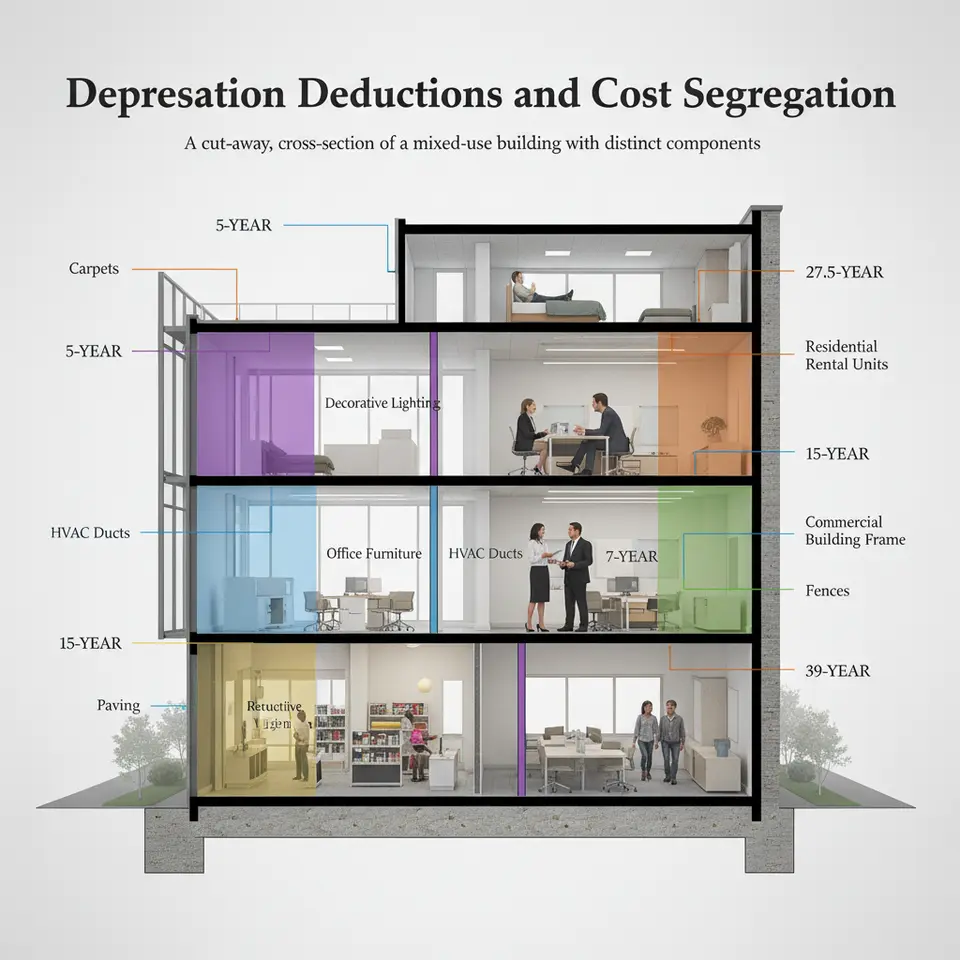
Depreciation provides a non-cash deduction, reflecting the gradual wear and tear of real estate assets. Standard straight-line depreciation disperses the cost over 27.5 years for residential property and 39 years for commercial. To accelerate write-offs, investors can engage in cost segregation studies, which reclassify portions of the building into shorter-lived asset categories—such as personal property or land improvements. By front-loading depreciation deductions, you can create significant paper losses in early years, reducing taxable rental income and freeing up cash for reinvestment.
Implementing Advanced Tax Planning Techniques
1031 Like-Kind Exchanges
Section 1031 exchanges remain one of the most powerful real estate tax strategies. By reinvesting proceeds from a sale into a qualifying replacement property within prescribed timeframes, investors can defer capital gains and depreciation recapture taxes. Strict rules apply: the identification period is 45 days, and the exchange must finalize within 180 days. Working with a reputable qualified intermediary and seasoned tax advisor helps ensure compliance, allowing you to preserve equity and scale your holdings more efficiently.
Cost Segregation Studies
Partnering with engineering and tax specialists, cost segregation studies break down real estate components—like carpets and lighting—into distinct depreciation schedules. These studies can accelerate write-offs into five-, seven-, and 15-year classes. While the upfront cost of a study can range from $5,000 to $15,000 depending on property size, the resultant present-value tax savings often justify the investment, especially for high-basis assets. If you’ve owned a property for several years without a study, consider adopting a “catch-up” method via IRS Form 3115 to claim missed depreciation deductions.
Opportunity Zone Investments
Opportunity Zones, designated low-income communities, offer tax deferral and potential forgiveness when capital gains are invested in Qualified Opportunity Funds. By directing gains into these funds, investors defer federal tax until the earlier of December 31 (2026) or the date the investment is sold. Moreover, holding the fund interest for at least ten years can result in permanent exclusion of post-investment appreciation. This incentive not only spurs community revitalization but can dramatically enhance long-term after-tax returns.
Entity Structuring for Pass-Through Deductions
Choosing the right legal entity can unlock additional tax benefits and liability protection. Forming an LLC, S corporation, or Real Estate Investment Trust (REIT) can affect how income flows to individual investors and whether you qualify for the 20% pass-through deduction under Section 199A. While LLCs offer operational flexibility, S corporations may reduce self-employment taxes on active income. Always consult a qualified CPA and attorney to determine which structure aligns with your investment goals.
Navigating State and Local Tax Incentives
While federal strategies deliver broad benefits, state and local rules can significantly affect net returns. Many jurisdictions provide incentives such as property tax abatements, historic preservation credits, and homestead exemptions. For instance, some municipalities waive or reduce property taxes for new construction or substantial renovations, thereby lowering holding costs during development. Before acquiring a property, consult local economic development offices and review online resources—such as your state’s department of revenue website—to map out potential credits and deadlines.
Another dimension involves state income tax. Certain states impose high marginal rates on rental or pass-through income, while others levy no personal income tax at all. By organizing properties within different states or electing specific flow-through entities, you may achieve jurisdictional arbitrage, minimizing overall effective rates. Be aware, however, of nexus thresholds that trigger filing requirements in states where you hold real estate assets.
In addition to exemptions, some localities offer Energy Efficiency Tax Credits for implementing green upgrades—such as solar panels or high-efficiency HVAC systems. Aligning property improvements with these programs not only contributes to sustainability goals but also increases net operating income by lowering utility expenses and generating tax offsets.
Real-World Case Study: Driving ROI Through Precise Tax Execution

Consider an investor who, several years ago, acquired a mixed-use building in an emerging urban corridor. By immediately commissioning a cost segregation study, the investor accelerated roughly 40% of the building’s basis into five- and seven-year categories. Simultaneously, the decision to reclassify the property ownership to an LLC taxed as an S corporation unlocked the 199A deduction, lowering taxable income by 20%.
Midway through the holding period, the investor executed a 1031 exchange, rolling both principal and accumulated gains into a larger property. This move deferred over $250,000 in capital gains and recapture taxes. To further optimize, a portion of the deferred gain was channeled into an Opportunity Zone fund, securing tax deferral until the end of this year (2026) and setting up permanent relief on future appreciation.
By layering these strategies—cost segregation, entity selection, like-kind exchange, and opportunity zone investment—the investor reduced federal and state tax obligations by more than $100,000 annually, boosting net cash flow by 18%. This disciplined, multi-pronged approach underscores how comprehensive planning, rather than one-off tactics, delivers meaningful ROI enhancements.
Expert Insights and Proactive Measures
Staying ahead in real estate tax planning requires a blend of diligence and collaboration with specialized professionals. Tax codes evolve daily, and what worked last quarter may no longer apply today. Engage CPAs, tax attorneys, and qualified intermediaries to conduct annual strategy sessions. Alongside human expertise, leverage cutting-edge tax software platforms to track deductions, monitor filing deadlines, and generate real-time projections.
Regularly reviewing your portfolio’s structure can uncover hidden opportunities. For instance, portfolio-level consolidations or spinoffs might yield fresh truckloads of underutilized basis, ripe for depreciation. Similarly, consider forming dedicated entities for high-risk properties to isolate liabilities.
Don’t overlook education: attend industry webinars hosted by leading authorities like the Urban Institute or state bar association seminars on property taxation. These forums provide actionable intelligence on pending regulatory shifts, ensuring you implement new directives before they become law.
Frequently Asked Questions
What is a 1031 exchange and how does it work?
A 1031 exchange is a tax-deferral strategy that allows investors to reinvest proceeds from the sale of a property into a similar “like-kind” asset. By meeting the 45-day identification and 180-day closing deadlines, investors defer capital gains and depreciation recapture taxes.
How can cost segregation benefit my rental property?
Cost segregation accelerates depreciation by reclassifying building components into shorter-lived categories. This front-loads deductions, lowers taxable income in early years, and improves cash flow for reinvestment.
What are Opportunity Zones and why invest in them?
Opportunity Zones are designated low-income areas offering tax incentives for capital gains invested in Qualified Opportunity Funds. Benefits include deferral of gains until December 31, 2026, and potential permanent exclusion of future appreciation after a ten-year holding period.
How often should I review my real estate tax strategy?
Perform an annual review with your CPA and tax advisor. Regular strategy sessions help you adapt to new legislation, update cost segregation studies, and explore entity restructurings for optimized benefits.
Conclusion
Optimizing your real estate tax strategies this year (2026) demands a proactive, integrated approach. From mastering property tax appeals and depreciation acceleration to structuring 1031 exchanges and opportunity zone investments, each tactic plays a crucial role in reducing taxable income and deferring liabilities. Coupled with savvy state and local incentive navigation, these methods can unlock substantial improvements in net cash flow and overall ROI. By collaborating with experienced advisors, leveraging technology, and maintaining a forward-looking mindset, you’ll be well-positioned to thrive in today’s ever-evolving tax landscape. Start refining your strategy today to reap the rewards of diligent planning and maximize your real estate returns.